
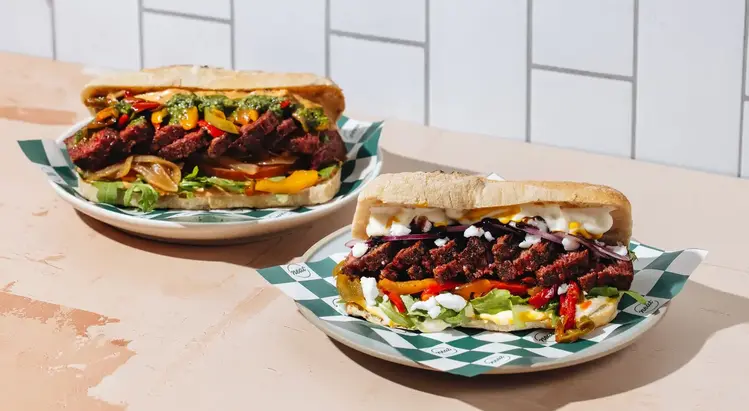

Quite shockingly, Neat, a prominent vegan quick-service restaurant (QSR) chain, has recently announced the closing of its flagship stores in New York and Dubai. To the utter disbelief of the customers and the vegan food community, Neat has been seen so far as a pioneer within the burgeoning market for vegan fast food. What has ultimately shocked many is the closure of a prime location when there seems to be a spiking demand for vegan food choices globally. Backed by Lewis Hamilton and Leonardo Di Caprio, the brand was seen as a trend setter. So, what went wrong?
The Rise of Neat: A Promising Start
Neat came out on the scene promising to provide customers with speedy, affordable, and mostly delicious plant-based meals for anyone seeking healthier and more sustainable alternatives to traditional fast food. Often positioned against more established vegan-brands, like By Chloe, and plant-based burger joints such as Impossible Foods and Beyond Meat, Neat’s menu offered an agglomeration of the many further sub-categories of vegan burgers, sandwiches, salads, and other snacks. The company ethos was founded on the vision of bringing plant-based eating to the masses through a guilt-free fast food experience. Both New York and Dubai represented strategic locations in the chain’s expansion plan.
The Challenges: What led to the closure?
Despite Neat’s promising start and initial success, several factors contributed to the downfall of its outlets in New York and Dubai. Understanding these challenges sheds light on the difficulties faced by vegan QSR brands in an increasingly competitive market.
Over-saturation of the Vegan Market
As interest in plant-based diets has burgeoned, so, too, have the competition among vegan fast food products. Neat was in line with many well-established brands-a few of which seemingly have a head start in the market. Impossible Foods, Beyond Meat, plus lesser-known vegan apps have long established strong brand loyalty both in New York and with clientele in Dubai. This increasing market saturation presented added difficulties for Neat trying to set itself apart by building its cult sales following.
High Operational Costs
Inhabitants of both New York and Dubai would readily attest to the high costs of real estate and operations. This renders it all the more challenging for a newcomer entering such high-cost markets to attain profitability quickly. Rent, labour, and logistics within these cities must indeed rank as among the world’s highest, and Neat may have found difficulty in striking sustainability and still maintaining its offer of lower-priced plant-based meals. The narrow profit margins typical of this brand, combined with the high cost of doing business at fabulous urban locations, would likely prove more damaging in enabling it to run its operations in the longer term.
Supply Chain issues
Sourcing the quality of vegan ingredients can put a stiff roadblock in the wheels of pioneering companies. High production costs associated with sourcing organic, non-GMO ingredients can act to compound supply chain challenges for Neat. In Dubai, where local sources of vegan ingredients are scarce, Neat may have faced challenges in coordinating consistent supply, as well as varying import costs with an inability to reliably fulfill customer orders – the latter putting a major dent in any QSR intended to be fast-moving.
Consumer Preferences and Changing Trends
While veganism is on the rise globally, it remains a niche market in many regions. In New York, while the health-conscious community is large, it’s also highly competitive, with consumers constantly looking for the next big food trend. Neat may have struggled to keep up with evolving consumer preferences or failed to capture the attention of a wider audience beyond vegans and vegetarians. Moreover, customers are increasingly seeking variety and novelty, and Neat’s menu offerings may not have been diverse enough to sustain long-term interest.
Marketing and Branding challenges
A vibrant brand identity is essential in a crowded marketplace. The successful QSR chains such as Shake Shack and Chipotle have built loyal audiences because of powerful brand stories, clear value propositions, and consistent marketing efforts. Neat may have struggled to carve out a memorable brand impression, or simply couldn’t resonate with the wider audiences in both New York and Dubai.
Implications for the Vegan QSR industry
The shuttering of Neat’s outlets in New York and Dubai highlights the challenges facing vegan QSR brands in an era of increased enthusiasm for plant-based diets. While the vegan niche is seeing sustained growth, it faces competitive pressures, pricing, labor, and evolving consumer mindset issues. Neat serves as a cautionary tale for other vegan brands looking to scale-wise, especially when they seek international entry.
For the industry at large, there are lessons to learn from Neat’s failures- success lies in balancing mission-driven philosophies with a sound business sense. While championing sustainable, plant-based foods is central to their purpose, profitability and operational efficiency remain pivotal quandaries behind sustaining businesses. Brands entering the vegan fast-food space must work hard at not just making top-notch products but also building brand identity and streamlining their cost structures in a continuous bid to stay in tune with shifting consumer demands.
